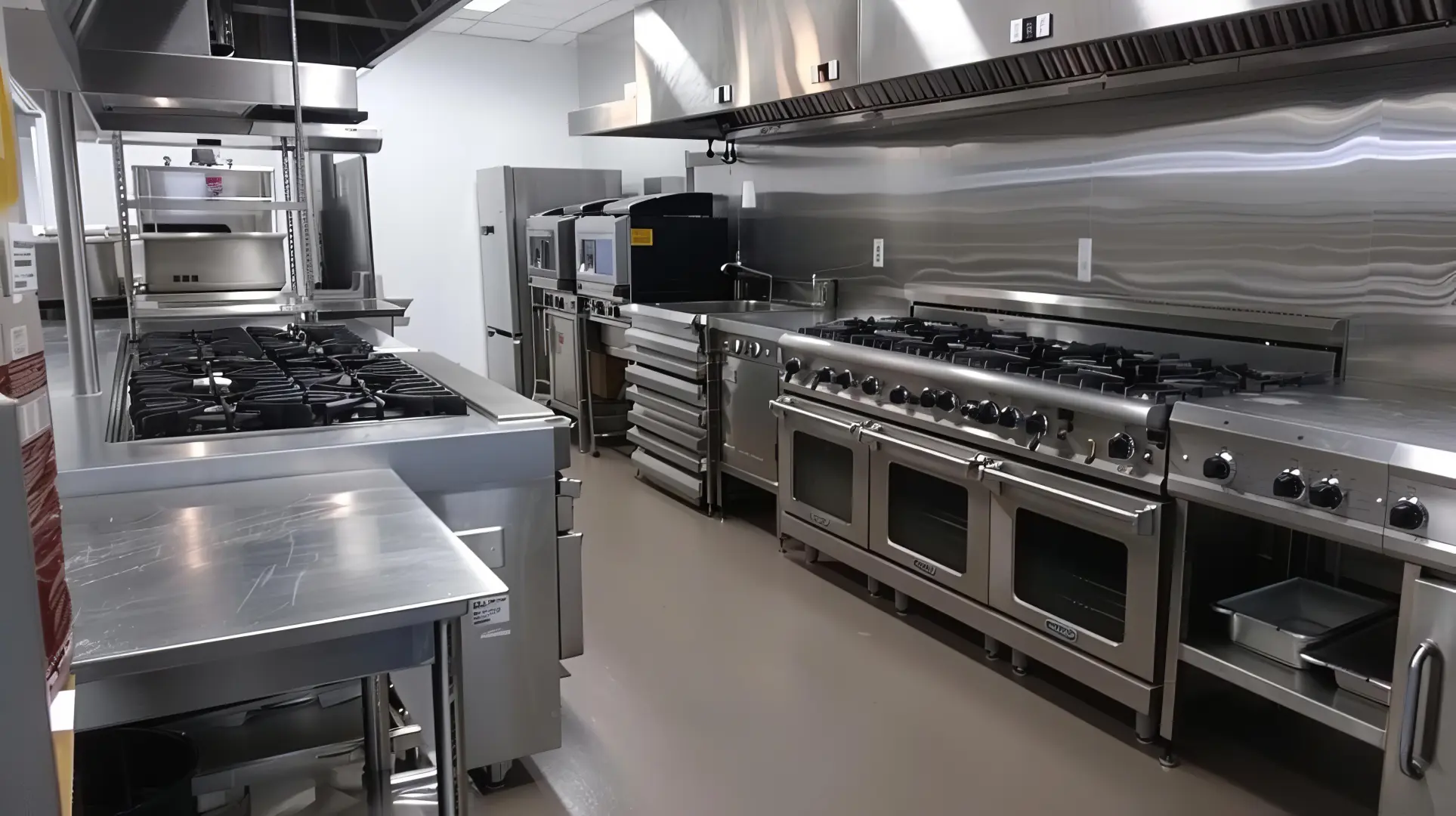
For commercial enterprises, a gas failure is more than an inconvenience—it is a threat to your revenue and legal standing. Whether you manage a high-output commercial kitchen, a care home, or a large industrial unit, you require engineers who hold the specific ACS Commercial qualifications necessary to work on large-scale plant rooms and catering equipment.
Operating a commercial kitchen comes with strict legal obligations under the Gas Safety (Installation and Use) Regulations 1998. Our COMCAT-certified engineers ensure your kitchen meets all Health and Safety Executive (HSE) standards.
Your heating system is a significant capital investment. Regular professional servicing in 2026 is vital for maintaining manufacturer warranties and meeting your ESG (Environmental, Social, and Governance) targets by reducing carbon emissions.
- Commercial Boiler Servicing: Comprehensive cleaning of key components, safety device testing, and combustion efficiency checks.
- Pipework & Strength Testing (CP16/CP17): We conduct tightness testing and purging on large-diameter gas pipework to ensure system integrity.
- Efficiency Upgrades: From 2026, new standards for boiler modulation and efficiency are being enforced. We help businesses transition to "hydrogen-ready" systems and high-efficiency condensing units.
Neglecting annual gas safety checks is not just dangerous—it is a criminal offence. Business owners or leaseholders can face:
- Hefty Fines: Unlimited fines for serious breaches.
- Prison Sentences: For extreme cases of negligence leading to injury.
- Insurance Invalidation: Most commercial insurers will refuse to pay out for fire or business interruption claims without a valid gas safety record.
How often does my commercial kitchen need a gas safety check?
By law, a commercial kitchen must have a gas safety inspection every 12 months. This is a mandatory planned maintenance requirement.
What is the difference between a domestic CP12 and a commercial CP42?
Commercial systems are significantly more complex. A CP42 covers specialised catering equipment, larger pipework diameters, and critical safety interlocks that are not found in domestic settings.
Do you work on LPG systems for mobile catering trailers?
Yes. Our engineers hold the specific ACS LPG qualifications required for mobile catering and outdoor events.